


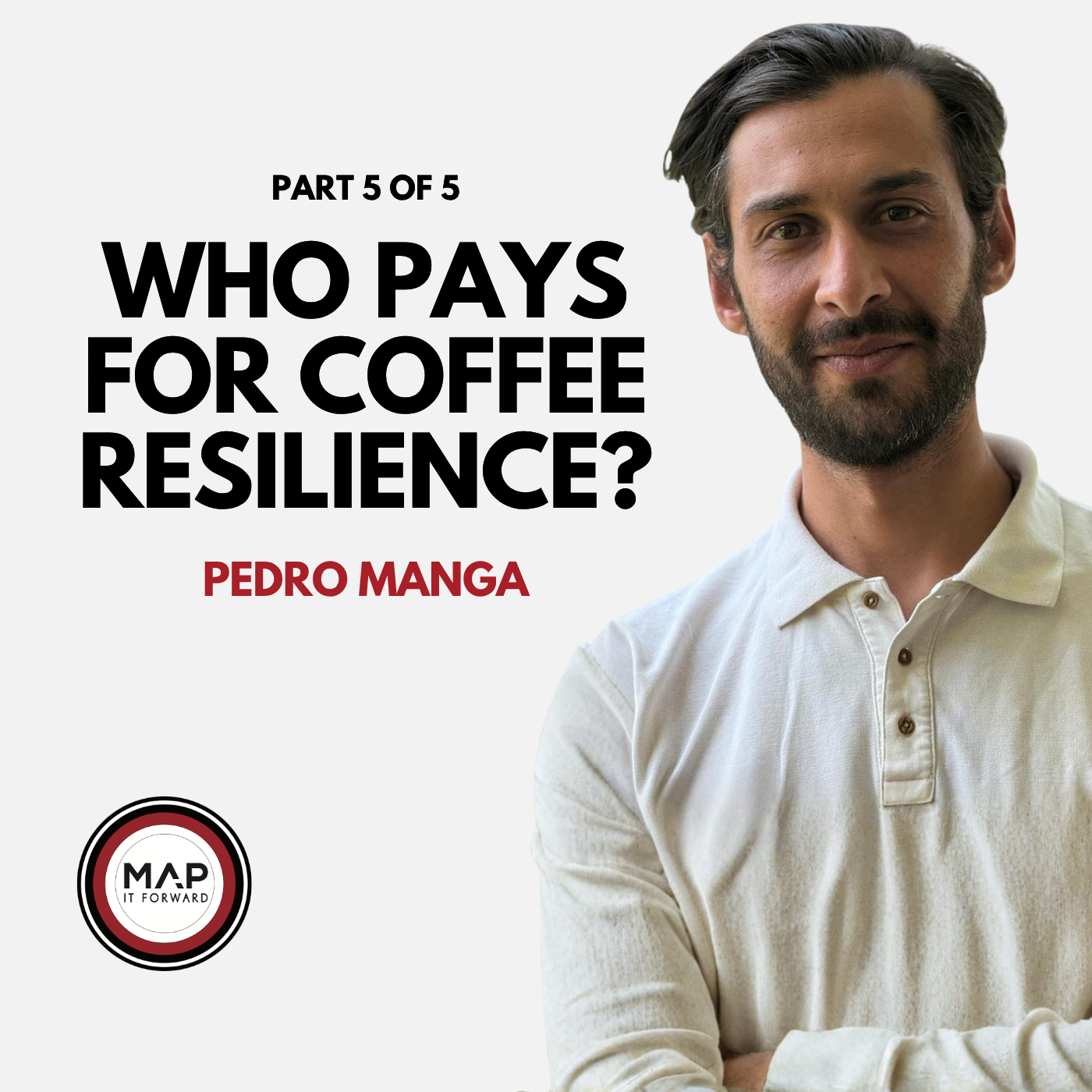
Part 5 of 5: Pedro Manga and Lee Safar close the series by examining climate risk, farm resilience and the long-term security of coffee supply. They discuss why resilience investments are unevenly distributed across producing regions, why short-term projects are not enough, and why the industry may need to start valuing the systems that protect future production.
Read MorePart 4 of 5: Pedro Manga and Lee Safar examine the relationship between compliance, transparency and sustainability impact across the coffee supply chain. They discuss why traceability can reduce commercial risk, why compliance has been unfairly diminished in sustainability conversations, and why long-term systems and measurement are necessary before businesses can credibly claim impact.

Read MorePart 3 of 5: Pedro Manga and Lee Safar examine the imbalance between sustainability standards created in consuming markets and the realities of implementing them at origin. They discuss Fairtrade, organic certification, EUDR, traceability and why producers and cooperatives can carry substantially different costs, commitments and risks from buyers further along the supply chain.
Read MorePart 2 of 5: Pedro Manga and Lee Safar examine how data moves through the coffee supply chain and why so little information flows back to producers and cooperatives. They discuss how better access to downstream information could improve quality decisions, commercial relationships, risk management and the ability of origin stakeholders to understand where value is created after coffee leaves the farm.
Read MorePart 1 of 5: Pedro Manga returns to The Daily Coffee Pro to examine what traceability and transparency should actually mean in the coffee supply chain. He and Lee discuss why publishing data is not the same as creating transparency, how buyers can influence traceability through sourcing decisions, and why sustainable relationships have to extend beyond price.
Read MorePart 5 of 5: Jem McDowall looks ahead at the future of tea and argues that today’s trends are likely to accelerate rather than disappear. Lee and Jem discuss the growing divide between commodity and specialty tea, changing consumer behavior, farm succession, liquidity, origin storytelling, and why simply producing more will not solve the industry’s structural problems.
Read MorePart 4 of 5: Jem McDowall explains why El Niño represents much more than a weather threat to tea farmers. Lee and Jem explore how climate disruption, fertilizer constraints, logistics problems, smallholder decisions, and the disappearance of excess production are making the global tea supply chain increasingly vulnerable.
Read MorePart 3 of 5: Jem McDowall explains why tea farmers are becoming increasingly vulnerable after years of low prices, rising input costs, oversupply, and underinvestment. Lee and Jem compare those pressures with coffee, discuss climate and currency risk, and examine why a weakened producer base could become one of the tea industry’s biggest long-term problems.
Read MorePart 2 of 5: Jem McDowall explains how tea is priced and traded through physical auction systems around the world, why tea has no futures market, and how buyers take ownership of the tea they purchase. The conversation also compares payment and financing structures in tea and coffee, raising important questions about where financial risk should sit in an agricultural supply chain.
Read MorePart 1 of 5: Jem McDowall of Universal Commodities explains how tea moves from fresh leaf through withering, oxidation, rolling or CTC processing, and drying. He also breaks down how tea is graded by leaf size, why those systems vary around the world, and how tea grading differs from the more standardized systems used in coffee.
Read MorePart 5 of 5: What will coffee look like in 20 years? Lee Safar and Cropster co-founder Norbert Niederhauser explore climate pressure, resilient varieties, higher and more stable coffee prices, experimental processing, AI, automation, the future of cafés, and why the industry still has the ability to shape what comes next.
Read MorePart 4 of 5: What does a sustainable coffee supply chain look like in practice? Lee Safar and Cropster co-founder Norbert Niederhauser explore how technology, measurement, data interpretation, and AI can help coffee businesses identify risk, reduce waste, and make more proactive decisions.
Read MorePart 3 of 5: Can coffee be environmentally sustainable if the economics do not work? Lee Safar and Cropster co-founder Norbert Niederhauser explore the connection between farming systems, pricing, risk, logistics, the C-market, and why sustainability ultimately depends on both environmental health and economic viability.
Read MorePart 2 of 5: Where is sustainability most lacking in coffee? Lee Safar and Cropster co-founder Norbert Niederhauser examine the weak points across farming, trading, roasting, pricing, and the environment, and discuss how businesses can identify risks before those weaknesses become a crisis.
Read MorePart 1 of 5: Sustainability in coffee is about far more than carbon emissions or environmental claims. Cropster co-founder Norbert Niederhauser joins Lee Safar to explore what a truly sustainable coffee supply chain requires, who carries responsibility, and why economic viability, transparency, and long-term thinking all matter.
Read MorePart 5 of 5: Colombia’s coffee sector faces years of recovery after the earthquake. Ana Donneys and Angel Barrera discuss reconstruction, mental-health strain, unequal access to resources, and why continuing to buy Colombian coffee and maintain long-term relationships may be one of the most meaningful ways the global industry can help.
Read MorePart 4 of 5: Colombian coffee is still moving, but the risks are building. Ana Donneys and Angel Barrera explain how damaged infrastructure, water rationing, El Niño and processing constraints could affect coffee quality and exportable volume through 2026 and into 2027.
Read MorePart 3 of 5: Colombia’s coffee sector now has to rebuild while continuing to produce. Ana Donneys and Angel Barrera explain the damage to wet mills, homes and infrastructure, transport constraints, and why El Niño could compound the pressure in the months ahead.
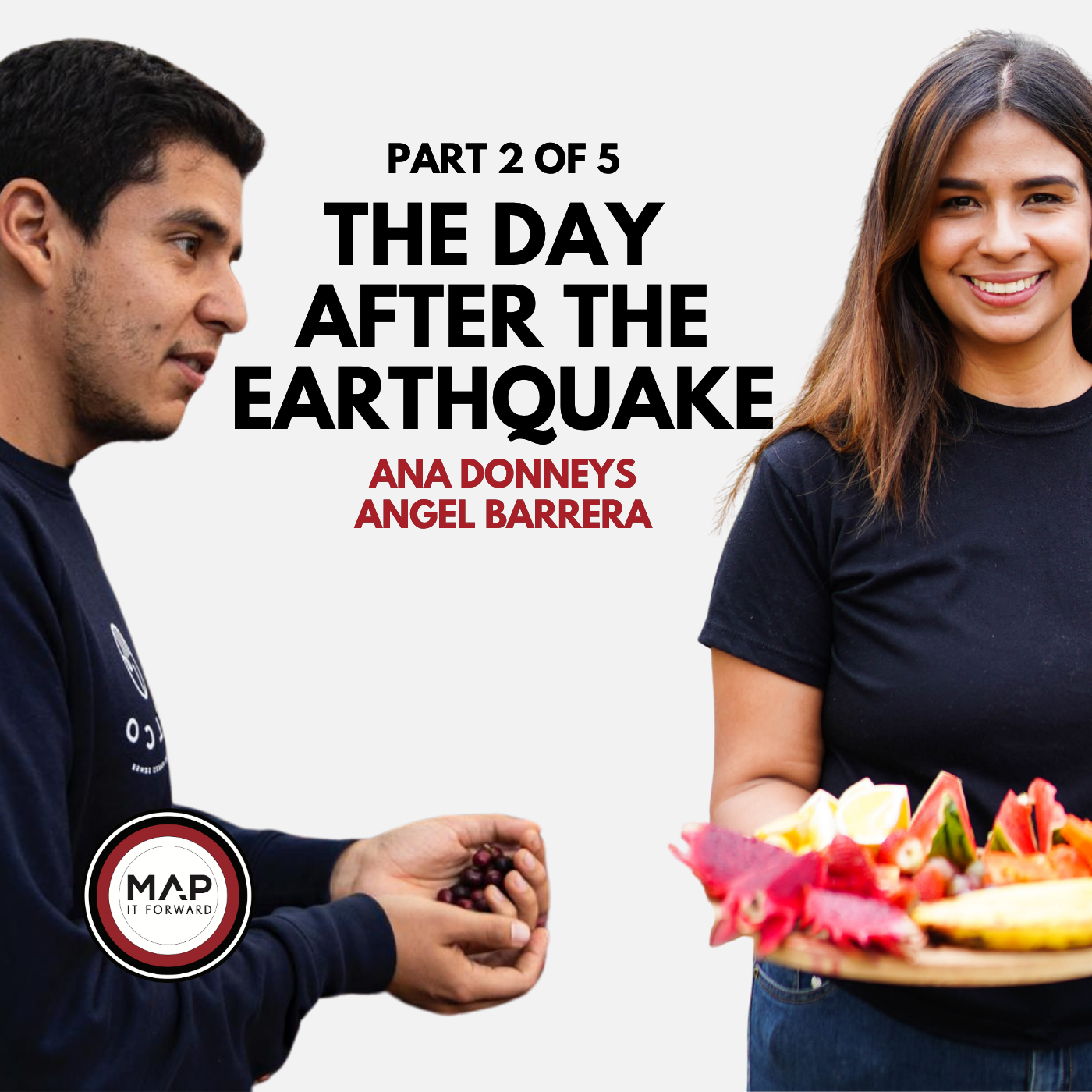
Read MorePart 2 of 5: The day after the earthquakes, communities across Colombia began responding while many people were still without safe homes, electricity, communications or road access. Ana Donneys and Angel Barrera describe the solidarity that emerged, damage across coffee-producing areas, and the first signs of disruption to Colombia’s coffee supply chain.
Read MorePart 1 of 5: Colombia’s coffee sector was already dealing with smaller harvests, rising costs and currency pressure when the August 10 earthquakes struck. Ana Donneys and Angel Barrera describe what happened that morning in Armenia and Pereira, the immediate damage they witnessed, and the first hours after the disaster.
Read More